

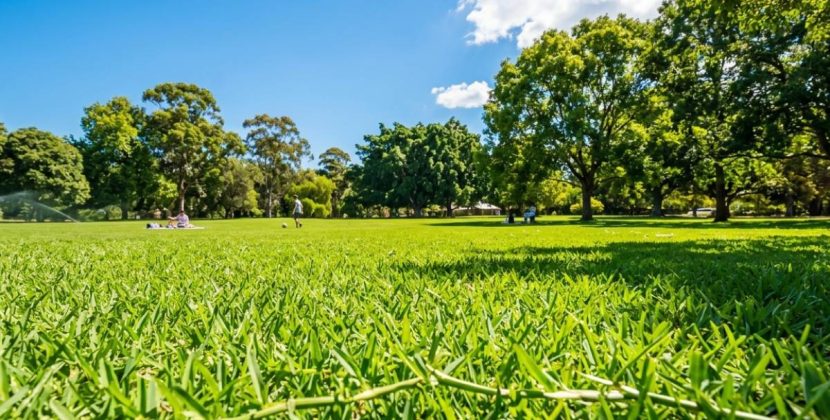



You want a lawn that stays emerald green in winter, recovers instantly from your dog’s zoomies, and doesn’t cost a fortune. Naturally, you’re looking at village green kikuyu.
But let’s be honest: the word “Kikuyu” probably makes you nervous. You might be picturing that wild, invasive grass that creeps into garden beds, strangles your roses, and grows three feet high if you turn your back for a weekend.
Here is the truth: Village Green is not your grandfather’s wild Kikuyu. It is a premium, genetically pure variety that promises the Holy Grail of turf—year-round color without the typical downsides. However, it is not a “set and forget” solution. If you buy it without understanding its maintenance needs, you might end up frustrated.
I’ve analyzed the growth habits, maintenance schedules, and real-world performance of this turf to bring you the 7 critical things no one tells you before you lay the first slab.
Table Of Contents
- Quick Verdict: Village Green Kikuyu at a Glance
- 1. It Is a PBR Variety
- 2. The "Winter Active" Promise Comes with a Catch
- 3. It Is "Male Sterile"
- 4. The Aggression Double-Edged Sword
- 5. Thatch Management is Mandatory
- 6. The Shade Tolerance Reality Check
- 7. Expert Insight: The Secret Weapon for Maintenance
- Conclusion
- Frequently Asked Questions
Quick Verdict: Village Green Kikuyu at a Glance
| Feature | Rating / Detail |
| Best For | High-traffic backyards, dogs, kids, and full sun areas. |
| Winter Color | Excellent (Best of all Kikuyu varieties). |
| Drought Tolerance | High (Deep root system). |
| Shade Tolerance | Low to Moderate (Needs 4-5 hours direct sun). |
| Maintenance Level | High (Requires frequent mowing in summer). |
| The “Killer Feature” | It doesn’t go dormant/yellow in winter like wild Kikuyu. |
1. It Is a PBR Variety
Most people assume all Kikuyu grass is the same. It isn’t.
Village Green is a Plant Breeder’s Rights (PBR) protected variety. This isn’t just a fancy marketing badge; it means the turf has been genetically isolated and tested for distinct characteristics. When you buy “Common Kikuyu” (often sold as “clean clippings”), you are getting a genetic lottery. It could be prone to disease, yellowing, or weird growth habits.
What this means for you:
- Genetic Purity: Every slab is identical. You won’t have patches of different shades of green.
- Certified Growers: Only licensed farms can grow it. You must buy from a reputable supplier to ensure you aren’t getting a cheap imitation. For example, premium suppliers like A View Turf adhere to strict PBR standards, ensuring you receive the genuine, genetically pure Village Green variety rather than a paddock-dug knockoff.
2. The “Winter Active” Promise Comes with a Catch
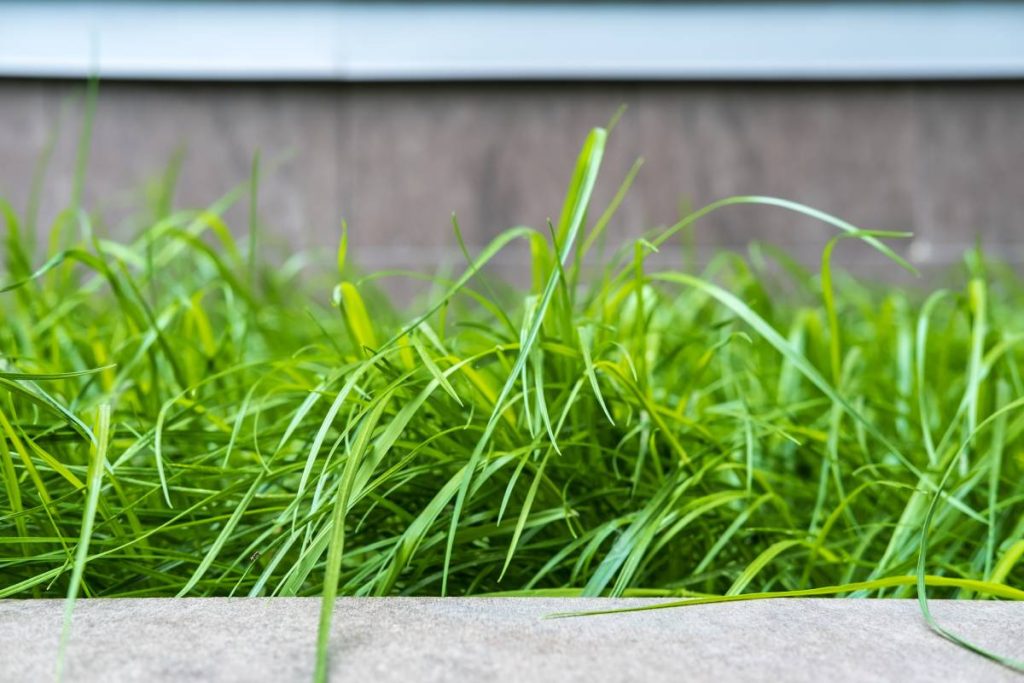
The #1 selling point of Village Green is that it stays green in winter. In the turf industry, we call this being “Winter Active.” Standard Kikuyu goes dormant and turns the color of straw as soon as the frost hits.
Village Green does stay green, but there is a caveat that most salespeople skip over: It only stays green if you feed it.
Because the plant remains active in cooler months, it is still hungry. If you starve it of Nitrogen in Autumn, it will lose color. It relies on a photosynthesis engine that runs all year, so it needs fuel.
- The Rule: Apply a high-quality, iron-based fertilizer in April/May to lock in that color before the soil temps drop.
3. It Is “Male Sterile”
This is a massive hidden benefit for allergy sufferers and neat freaks.
Wild Kikuyu produces distinctive flower spikes that release pollen and seeds. These seeds blow into your garden beds, cracks in the pavement, and your neighbor’s yard, spawning new weeds everywhere.
Village Green is Male Sterile. It does not produce viable seed.
- Benefit A: No pollen clouds triggering hay fever.
- Benefit B: It won’t spread by seed. It only spreads by “runners” (stolons and rhizomes), which are much easier to control with edging.
4. The Aggression Double-Edged Sword
Kikuyu is the Wolverine of the turf world: it heals incredibly fast. You can drive a truck over it, let the dogs dig it up, or scorch it with the BBQ, and it will repair itself within weeks.
However, that recovery speed comes from aggressive growth. During peak summer (December-February), you might need to mow this grass twice a week to keep it looking manicured.
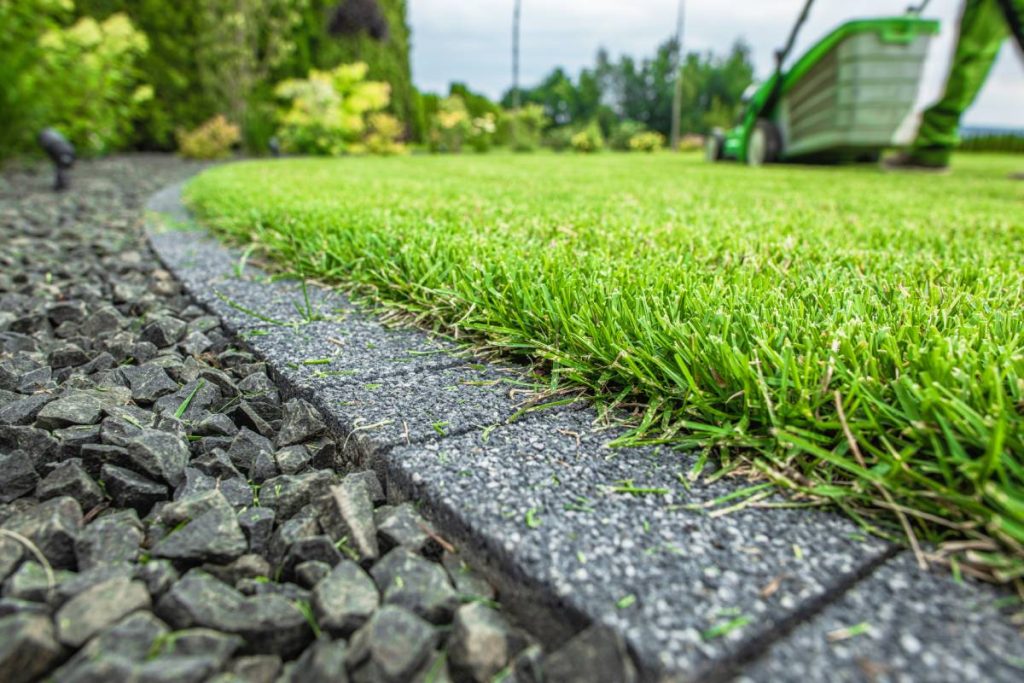
The Warning: If you have manicured garden beds flush with the lawn level, Village Green will invade them.
- The Fix: You must install a solid garden edge (concrete, brick, or metal) that goes at least 100mm into the ground to stop the underground runners (rhizomes).
5. Thatch Management is Mandatory
This is the technical part where most homeowners fail. Because Village Green grows so densely, it accumulates “thatch”—a layer of dead organic matter between the grass blades and the soil.
If you let the thatch get too thick (over 10-15mm), the lawn becomes “spongy.” When you walk on it, you’ll sink in. This sponginess prevents water and fertilizer from reaching the soil and can lead to scalping when you finally do mow.
Your Annual Ritual:
To own Village Green, you must be willing to scalp or scarify your lawn once a year (usually in Spring). This involves mowing it right down to the dirt to remove the thatch layer. It looks terrible for 2 weeks, then bounces back better than ever.
6. The Shade Tolerance Reality Check
Let’s bust a myth: No Kikuyu loves the shade.
While Village Green is marketed as having “improved” shade tolerance compared to wild Kikuyu, it is not a shade-loving grass like Buffalo (Sir Walter) or Zoysia.
- The Math: Village Green needs a minimum of 4-5 hours of direct sunlight per day.
- The Risk: If you lay this on the south side of a two-story house or under a giant oak tree, it will thin out and eventually die. The runners will become stringy as they “reach” for the light.
7. Expert Insight: The Secret Weapon for Maintenance
If the idea of mowing twice a week scares you, there is a “cheat code” used by greenkeepers that few homeowners know about.
PRO TIP: Use a PGR
You can spray a product called a Plant Growth Regulator (Primo Maxx or generic Trinexapac-ethyl) on your Village Green.
What it does: It hormonally stops the grass from growing upwards while forcing it to grow sideways and down (roots).
The Result: You mow half as often, the grass becomes denser and greener, and it requires less water. It is the single best thing you can do for a Kikuyu lawn.
Conclusion
So, is Village Green Kikuyu right for you?
If you have a large backyard, active dogs, kids who play sports, and plenty of sunlight, yes—it is arguably the best value-for-money turf on the market. It gives you that elite “stadium turf” look that Buffalo simply cannot match.
However, if you want a low-maintenance lawn that you can ignore for three weeks while you go on holiday, avoid this. The primary benefit of synthetic lawn is that it requires zero mowing; if that is your priority, you are better off with artificial turf or a slow-growing Zoysia.
The final question to ask yourself: Are you willing to mow frequently in exchange for a lawn that is virtually indestructible?


Comments